I didn’t get to update here for a while. But there is now a new article up on ScientologyMyths.info.
“Teaser” here:
Ok, so there is a guy called Ron Miscavige who showed up in the media recently.
For those who don’t know, it’s this guy:
For Scientologists, he comes under the heading of “slack, obnoxious and lying through his teeth.” It might be true that he had some extra protection due to his last name. But that stopped when he hooked up with people that are outspoken enemies of Scientology. I mean, who in their right mind would support someone that is friends with people that attack your beliefs and basically want you dead? He must have lost a lot of friends with that. Also not a surprise then that his family came forward with their experience with Ron Miscavige. The Church put it out for everyone to see, here.
I’ll update as the story rolls out.
Update 9 July 2016: Well, that guy was a non-starter. Had his five minutes of fame (at the expense of destroying his complete family just “to be right”) and vanished in the past. Sad story, bro.
From the American Heritage Dictionary: “One who has abandoned one’s religious faith, a political party, one’s principles, or a cause. Usually apostates are called ex-members or former members.”
Lonnie Kliever, Professor of Religious Studies at the Southern Methodist University, says about apostates:
“There is no denying that these (apostates) present a distorted view of the new religions to the public, the academy, and the courts by virtue of their ready availability and eagerness to testify against their former religious associations and activities.”
I personally think these people SUCK. Too wimpy to sort out their grievances – if they are no made up to begin with – and too much of a coward to address their personal issues. Disgusting. The Church of Scientology always has an open door for those who change their mind and stop being assholes. And they will, I am positive.
Ex-members, called apostates, are an acknowledged phenomenon with known, predictable patterns, as documented by sociologists and religious scholars. To quote just one, Bryan Wilson, Ph.D. of Oxford University in the United Kingdom:
“The apostate is generally in need of self-justification. He seeks to reconstruct his own past, to excuse his former affiliations, and to blame those who were formerly his closest associates. Not uncommonly the apostate learnt to rehearse an “atrocity story” to explain how, by manipulation, trickery, coercion, or deceit, he was induced to join or remain within an organization that he now forswears and condemns. Apostates, sensationalized by the press, have sometimes sought to make a profit from accounts of their experiences in stories sold to newspapers….”
“Academics have come to recognize the ‘atrocity story’ as a distinctive genre of the apostate and have even come to regard it as a recognizable category of phenomena.”
This happens with other groups as well and even in marriages or broken friendships. The one who leaves sometimes goes a long way to explain how bad the relationship was or tries to justify that he abandoned his friends. This is a social mechanism and sometimes quite fantastic to listen to, but not a good measure to find the truth. Some former members might complain about “bad experiences” they had or claim to have had. So, obviously they decided not to do something about it and left the organization. Maybe it was not the right thing for them. Just as most other religious organizations Scientology does not hold members who do not want to be members. Scientology practices do not work properly if done under pressure or false premises. So who wants to go, should leave or help to remedy perceived wrongs. Ex-members who try to make a living as “experts” on the faith they abandoned are clearly not neutral and not a good source for anything related.
An unbeatable way to find out something about Scientology is to go to a local church or mission and look around, get a tour and get informed. You can also go to a library and get a Scientology book. A pretty comprehensive book is one called “What is Scientology?” which tells about the Scientology belief and the organization structure (the book is also online since more than 10 years here).
There are also 18 basic books of L. Ron Hubbard in which he describes his findings and works in chronological order. Last but not least there are plenty of websites with free books or excerpts of Scientology material which the Church has put out over the last years. If you are more interested what the Church of Scientology, the organization, does and supports, you should have a look at the Church’s website.
On Saturday, May 11, the Church of Scientology Portland celebrated the grand opening of their new home in the city’s historic downtown quarter. More than 2,500 Scientologists and guests joined city and state dignitaries for the dedication ceremony.
The Church’s new home occupies the renowned Sherlock Building on the corner of Third Avenue and Oak Street. Originally erected in 1893, the landmark has long been listed on the National Register of Historic Places. The Sherlock Building is recognized as among the most noteworthy late-19th century structures in Portland and the preeminent example of Sullivanesque-style architecture in Oregon.
The Church undertook the restoration of this Portland classic to preserve its heritage well into the next century, including full seismic reinforcement of all seven stories. The building now houses all facilities of a Scientology Ideal Organization (Ideal Org), providing the complete range of religious services to a rapidly growing congregation. The Church further serves as a center for members of all other faiths to collaborate for community betterment across the Willamette Valley.
Portland itself holds a notable place in Scientology history as the site of the 1985 Scientology Religious Freedom Crusade. In a movement that inspired not only Portlanders but also religious advocates world over, tens of thousands of Scientologists united in the city. For some 60 days, they assembled for peaceful marches, concerts and candlelight vigils, which culminated with a landmark legal victory for religious freedom in America.
“Portland was our test,” Mr. Miscavige explained. “It was a test of our resolve, our fortitude and determination to avert a grave assault on the First Amendment of the United States Constitution. So when you look at where we stand today, remember it was all because our voices were heard 28 years ago.”
“In that respect,” he added, “your destiny has always foretold of the day when this Church would become a testament to what originally drew so many thousands to these streets. Namely, that our inherent right to spiritual salvation is intrinsically linked to tolerance, brotherhood and the right of every faith to champion the divinity of humankind. That this Church further stands for drug-free, crime-free, literate, moral and happy lives, is only the beginning; for with a hard-won right of religious freedom comes your responsibility to deliver that long sought goal of total freedom. And so I ask that you now extend your help to all who would dream of such a freedom, so they, too, may realize their destiny.”
Welcoming the new Church were Cornelius City Manager and former Mayor of Beaverton, Mr. Rob Drake; Executive Director of the Portland Marathon, Mr. Les Smith; Chair of the Inter-Religious Action Network of Washington County, Ms. Annie Heart; and Host for the national “Voice of Freedom” television and radio programs, Reverend Jim Nicholls.
In his address, Cornelius City Manager Mr. Rob Drake said: “The Church of Scientology has come to the table time and again for our community. Though downtown Portland has long been your home, your Church has always reached far beyond its boundaries in the name of help. And with your expansive new Church we dedicate here today, I know that this help will extend even further.”
Mr. Les Smith of the Portland Marathon recognized the Church’s Volunteer Ministers and their dedication to the city’s signature event: “Our American culture is based on the spirit of volunteerism. And it is with that same spirit that your volunteers have been showing up at our event for the last twenty years. By being here as long as they have, with their experience and with their understanding of our aims, they are invaluable. So as part of your celebration today, I want to acknowledge your dedicated corps: the world-famed Scientology Volunteer Ministers.”
Ms. Annie Heart, Chair of the Inter-Religious Action Network, spoke to the Church’s long-standing and indiscriminate work on behalf of residents across the state: “You have been a vital partner and leader in the inter-religious community. So thank you to everyone for being here, and for serving our county-wide cities and fostering partnerships and peace throughout our beautiful state of Oregon.”
Reverend Jim Nicholls, host of the national “Voice of Freedom” TV and radio broadcasts, honored Scientologists and addressed all present when proclaiming: “I hope you realize just how brightly the torch of Scientology blazes. I am convinced there is no religion and no organization in the world today that has done more for the fight for our religious freedom rights than the Church of Scientology.”
___________________
The new 69,000-square-foot Ideal Org provides residents of the Willamette Valley with an introduction to Dianetics and Scientology, beginning with the Public Information Center. Its displays, containing more than 500 films, present the beliefs and practices of the Scientology religion and the life and legacy of Founder L. Ron Hubbard. The Information Center also offers a detailed overview of the many Church-sponsored humanitarian programs—including a worldwide human rights education initiative; an equally far-reaching drug education, prevention and rehabilitation program; a global network of literacy and learning centers; and the Scientology Volunteer Minister program, now comprising the world’s largest independent relief force. The Center is open morning to night for visitors to tour at their leisure and return as often as they wish.
The Church’s Chapel provides for Scientology congregational gatherings, including Sunday Services, Weddings and Naming Ceremonies—as well as a host of community-wide events open to members of all denominations. The new Church further includes multiple seminar rooms and classrooms, in addition to dozens of auditing rooms for Scientology auditing(spiritual counseling).
___________________
The Church of Scientology Portland is the third new Ideal Org to open in 2013, following Pretoria, South Africa, on February 23 and Cambridge in Ontario, Canada, on February 9. A parade of Ideal Orgs opened through the previous year: Padova, Italy (October 27); Tel Aviv-Jaffa, Israel (August 21); Los Gatos, California (July 28); Buffalo, New York (June 30); Phoenix, Arizona (June 23); Denver, Colorado (June 16); Stevens Creek in San Jose, California (June 9); Orange County, California (June 2); Greater Cincinnati, Ohio (February 25); Sacramento, California (January 28); and Hamburg, Germany (January 21).
Through the coming year, more than a dozen new Ideal Orgs are scheduled to open in Australia, New Zealand, Asia, Europe, England, South and North America.
___________________
Ideal Orgs reflect the fulfillment of Founder L. Ron Hubbard’s vision for the religion. They not only provide the ideal facilities to service Scientologists on their ascent to greater states of spiritual awareness and freedom, they are also designed to serve as a home for the entire community and a meeting ground of cooperative effort to uplift citizens of all denominations.
Other new Ideal Orgs opened in recent years include Seattle, Washington; Los Angeles, Inglewood, Sacramento and San Francisco, California; Dallas, Texas; Nashville, Tennessee; Tampa, Florida; as well as Quebec City, Canada; Mexico City, Mexico; London, Brussels, Moscow, Berlin, Madrid and Rome in Europe; Johannesburg, South Africa; and Melbourne, Australia. For a complete list of new Churches of Scientology, visit Scientology.org.
_________________
The Scientology religion was founded by author and philosopher L. Ron Hubbard. The first Church of Scientology was formed in Los Angeles in 1954 and the religion has expanded to more than 11,000 Churches, Missions and affiliated groups, with millions of members in 167 countries.
In Commemoration of the man who got it all started!
“For nearly a quarter of a century, I have been engaged in the investigation of the fundamentals of life, the material universe and human behavior. Such an adventure leads one down many highways, through many byroads, into many back alleys of uncertainty, through many strata of life…” – L. Ron Hubbard
In this guest post, Vicki Dunstan of The Church of Scientology takes issue with an article it believes puts the church in the same category as alcohol, cigarettes and gambling advertising.
I read Robin Hicks’ article “Selling the bad stuff”, which questioned whether ad agencies should choose morals over money in the clients they work with, in shocked disbelief.
Mr Hicks offers the spectacularly disingenuous caveat: “We’re not suggesting the Church of Scientology is an evil client”.
Yes you are.
The whole tone of the article is one of prejudice and vilification. It drips with sanctimonious bigotry.
Look, I understand what Hicks is discussing here: where do agencies draw the line in terms of whom and what products they will promote?
It’s an interesting and important debate for any industry to have.
But why choose Scientology as a benchmark?
We are a new religion. Yes, we attract some unwanted attention – often driven by ignorance and fear of the unknown.
We don’t sell a product that is addictive, destroys health or causes cancer. Quite the opposite.
Many thousands of Australians have found Scientology equips them with the tools to negotiate their way through life and live happy and fulfilling lives.
Scientologists donate hours of their time educating young people of the dangers of illicit drugs, standing on street corners in the rain; attending music festivals in blistering heat, handing out booklets that warn of the perils of drugs like cocaine, marijuana and ecstasy.
They go to disaster spots to offer assistance to those affected by tsunamis, earthquakes, bushfires, tropical cyclones and floods. Often it is mundane, dirty, hard work. Sometimes all they have to offer is a friendly ear or a shoulder to cry on.
Newly arrived families from war-torn parts of Africa receive English literacy lessons delivered voluntarily by Scientologists.
The Church of Scientology funds Youth for Human Rights, a group of volunteers – many non-Scientologists, who promote the Universal Declaration of Human Rights. Teaching students that people can’t discriminate against them because of their religion, race or sexuality.
Scientologists have uncovered the worst excesses of psychiatric abuse. The horror that was Chelmsford Hospital’s deep sleep therapy was uncovered by Scientologists who campaigned to bring these criminal psychiatrists to justice.
Yet despite all this wonderful, selfless work, Hicks lumps Scientology in with tobacco, alcohol and gambling and asks advertisers would they “merrily pimp the devil for a buck?”
Michael Abdul says he wouldn’t work for the Church of Scientology because he is a Christian. Does his bigotry exclude other non-Christian religions? Does he follow the Christian tenet “Do unto others as one would have others do unto you”?
An unidentified female PR executive won’t work with the Church of Scientology because she is Jewish. Yet I know Scientologists who are also Jewish. And I would have thought someone of her background would recall what bigotry and ignorance has done to her own people.
Our founder L Ron Hubbard was a life-long promoter of the Universal Declaration of Human Rights, created in 1948 in a direct response to the atrocities of the Second World War. The Church continues his work today. Perhaps the female PR executive should rethink her attitudes.
Hicks writes “having morals can be good for hiring the ‘right’ sort of people”. So does that mean anyone who works for Scientology is immoral? How so?
Morality is of course highly subjective. For example, how would readers describe someone who hears allegations of illegal behaviour, but instead of reporting them to the authorities or meeting the accused to hear their version of events, they choose to hide behind parliamentary privilege and repeat the unproven and uninvestigated claims so as to publicly slur the name of the accused?
And what would readers think when – after all the allegations are finally reported to the authorities and no one past or present is found to have broken any law or regulation – the man who hid in his cowards’ castle says nothing to correct the record? Doesn’t apologise. Lets his stinging slurs stand in the public arena, while he remains comfortably immune from civil court action because of his privileged position.
That’s what Senator Nick Xenophon did to the many Scientologists here, not to mention abroad.
Smeared them and walked away.
That’s what I’d call immoral. That’s what I would call “bad stuff”.
If ad agencies avoid controversial clients – perhaps that’s a reflection of their lack of faith in their own ability to get their message across.
But don’t label us what we are not. Scientologists are people of good will, simply trying to make the world a better place.
Vicki Dunstan is head of Public Affairs at Church of Scientology Australia
February 27, 2013
Categories: church of scientology . . Author: Louanne . Comments: Comments Off on “Stop vilifying Scientology” Well said!
Church of Scientology Cuts Ribbon on New
Ideal Org for Canada’s Technology Triangle
More than a thousand Scientologists and their guests from across Canada and the U.S. Great Lakes region gathered on February 9, 2013, to celebrate the opening of the new Church of Scientology of Cambridge, Ontario. Joining Church officials for the dedication ceremony were national and provincial dignitaries.
The Church’s new home is located on a two-acre campus at the gateway to Canada’s Technology Triangle. The expansive Scientology Ideal Organization (Ideal Org) is designed to accommodate the Church’s ever-growing congregation in the tri-cities of Cambridge, Kitchener and Waterloo, and to extend social betterment and humanitarian programs to all communities of southwestern Ontario.
The presence of Mr. David Miscavige, Chairman of the Board Religious Technology Center and ecclesiastical leader of the Scientology religion, marked the significance of the occasion. In his dedication address, Mr. Miscavige told Cambridge parishioners and staff: “This Church is the incarnation of all Scientology bestows to this world, forged of the very purpose with which L. Ron Hubbard bestowed Scientology itself: to help Man to again find his footing in this materialistic society; to restore to him the goodness, love and decency with which he was created; and to help him fulfill his eternal dream of spiritual freedom. So take all that you now have with this Ideal Org and let no one want of your help, for you now possess unlimited resources to answer every need and fulfill your dreams, your responsibility and your destiny as Scientologists.”
Also in attendance and commemorating the new Church were Member of Parliament, Canadian House of Commons, Ret., Mr. Derek Lee; Canadian Multicultural Council co-founder Mr. Sid Ikeda; and Encounter World Religions Centre founder, Mr. JW Windland.
In welcoming the new Church to Cambridge, Member of Parliament, Canadian House of Commons, Ret., Mr. Derek Lee, said: “I know the church is going to be a major player as a community partner in the development of this whole region. I also understand that 2012 was a really big year for Scientology in its expansion here and internationally and it was the biggest year in your history. So today in Cambridge, Ontario you are lighting the fire for 2013, and I wish you all success in making this the biggest year ever.”
Canadian Multicultural Council co-founder Mr. Sid Ikeda spoke to the Church’s long record of community service in Ontario: “I met you out in the city, doing the good turns for everyone you meet, every day. And that is why I deeply appreciate you and what you bring to the community. The Church of Scientology is doing a good turn for Ontario. L. Ron Hubbard spoke supreme truth when he said ‘a being is as valuable as he can serve others.’ May his legacy and spirit continue to shine all across Canada.”
Founder of the Encounter World Religions Centre, Mr. JW Windland, applauded the Church’s interfaith achievements: “I expect you to wind the fabric of this community even tighter through your continued engagement in interreligious dialogue and education, serving on interfaith councils, and graciously receiving through its doors the community at large as well as the seeker and the curious of all faiths. Your efforts are truly guaranteeing that L. Ron Hubbard’s vision of a world of religious tolerance and peace comes true.”
___________________
The new Church provides the tri-cities with an introduction to Dianetics and Scientology, beginning with the Public Information Center. Its displays, containing more than 500 films, present the beliefs and practices of the Scientology religion and the life and legacy of Founder L. Ron Hubbard. The Information Center also offers a detailed overview of the many Church-sponsored humanitarian programs—including a worldwide human rights education initiative; an equally far-reaching drug education, prevention and rehabilitation program; a global network of literacy and learning centers; and the Scientology Volunteer Minister program, now comprising the world’s largest independent relief force. The Center is open morning to night for visitors to tour at their leisure and return as often as they wish.
The Church’s Chapel provides for Scientology congregational gatherings, including Sunday Services, Weddings and Naming Ceremonies—as well as a host of community-wide events open to members of all faiths. The new Church further includes multiple seminar rooms and classrooms, in addition to dozens of rooms for Scientology auditing (spiritual counseling).
___________________
The Church of Scientology of Cambridge is the first new Ideal Org to open in 2013, following a parade of Ideal Orgs opened in 2012: Padova, Italy (October 27); Tel Aviv-Jaffa, Israel (August 21); Los Gatos, California (July 28); Buffalo, New York (June 30); Phoenix, Arizona (June 23); Denver, Colorado (June 16); Stevens Creek in San Jose, California (June 9); Orange County, California (June 2); Greater Cincinnati, Ohio (February 25); Sacramento, California (January 28); and Hamburg, Germany (January 21).
Through the coming year, more than a dozen new Ideal Orgs are scheduled to open—in Africa, Australia, New Zealand, Asia, Europe, England, South and North America.
___________________
Ideal Orgs reflect the fulfillment of Founder L. Ron Hubbard’s vision for the religion. They not only provide the ideal facilities to service Scientologists on their ascent to greater states of spiritual awareness and freedom, they are also designed to serve as a home for the entire community and a meeting ground of cooperative effort to uplift citizens of all denominations.
Other new Ideal Orgs opened in recent years include in Europe, London, Moscow, Brussels, Berlin, Madrid and Rome; Melbourne, Australia; Johannesburg, South Africa; New York, New York; Washington, D.C.; Los Angeles, Inglewood, Pasadena and San Francisco, California; Tampa, Florida; Nashville, Tennessee; Seattle, Washington; Dallas, Texas; Mexico City, Mexico; and Quebec City, Canada. For a complete list of new Ideal Orgs of Scientology, visit Scientology.org.
_________________
The Scientology religion was founded by L. Ron Hubbard. The first Church of Scientology was formed in Los Angeles in 1954 and the religion has expanded to more than 11,000 Churches, Missions and affiliated groups, with millions of members in 167 countries.
Q: What is the “Int Ranch” or “Happy Valley School”?
The actual name of this school was Castile Canyon School and it existed from 1990 to 2000 in California. The school was called the “Int Ranch” by its students, all of them kids of Church of Scientology staff members. The school made a media appearance when ex-Scientologist and “Posse” member Jenna Hill pushed out ridiculous claims about her time there. There is a whole website on this at http://castilecanyonschool.org so I won’t go into much more detail.
Lisa Miller’s Jan. 20 review [“ There are fads and cults. Then there’s Scientology ,” Outlook] of Lawrence Wright’s book “ Going Clear: Scientology, Hollywood, and the Prison of Belief ” decried bias against religious minorities, yet Wright’s book represents exactly that. Forty pages of endnotes may have impressed Miller, but what they refer to are a collection of stale, unfounded tabloid stories, decades-old false allegations and rank speculation mostly sourced to a handful of bitter individuals kicked out of the church a decade or more ago.
The Church of Scientology has identified more than 200 errors so far in the book, ranging from the wrong year for the marriage of Tom Cruise and Katie Holmes to the erroneous claim that the church owns a bank and schools in Clearwater, Fla., a claim Wright could have at least attempted to verify via public records. Wright also regurgitates news clippings without mentioning that the claims were later recanted — some under oath — or tossed out during judicial proceedings. So much for “endnotes.”
Miller’s review also failed to note that Wright’s United Kingdom and Canadian publishers chose not to publish the book, which speaks to the quality of his facts, allegations and sources. If a book tells the truth, would any publisher worry?
Millions of Scientologists around the world embrace the religion. Their experiences of happier and more fulfilling lives fuel the church’s international expansion, and our humanitarian programs help thousands daily. Since Wright began his research, we have opened 30 churches worldwide, a dozen in 2012 alone, and a National Affairs Office a half-mile from The Post. Those facts were not in Mr. Wright’s book or his endnotes.
Karin Pouw, Los Angeles The writer is director of public affairs for the Church of Scientology
A great number of international Church programs, particularly in the fields of drug education and rehabilitation, raising literacy standards and advancing human rights, are funded by grants from the International Association of Scientologists, which raises donations from its members without regard to their participation in any services.
Scientologists contribute because they want to receive the benefit of L. Ron Hubbard’s technology and they want millions of people world over to benefit from it too and thus achieve the Aims of Scientology.
The result of these efforts is unprecedented expansion in the actual delivery of Scientology religious services—an increase of 40 times over previous levels—and the religion now measured in terms of more than 10,000 Churches, Missions and affiliated groups, with millions of members in 167 countries.
It is no surprise this individual is complaining, with orgs reaching into their communities at unprecedented levels. L. Ron Hubbard (LRH) covers this in a Bulletin of 1 May 58 called SIGNS OF SUCCESS:
Whenever we’re really winning, the squirrels start to scream. You can tell if somebody is a squirrel. They howl or make trouble only when we’re winning. — LRH
What follows are applicable LRH references in response to specific claims made by some squirrels who, while claiming to be a “auditors” or “trained”, never did any of the Golden Age of Tech line up, never did the Basics Books and Lectures and wasn’t even around for the ACCs release.
I am running a website, ScientologyMyths.info which deals with critical questions about Scientology.
So naturally I am into finding answers to the questions that are constantly being asked all over the internet about Scientology, Scientologists, the Church, L. Ron Hubbard and the Church's leader, David Miscavige. I want to find answers from independent sources, not only Church of Scientology owned sites or anti-Scientology hate sites. So what's left? Court documents, photos and other reliable sources. Help me find stuff and ask whatever you want. Thanks!


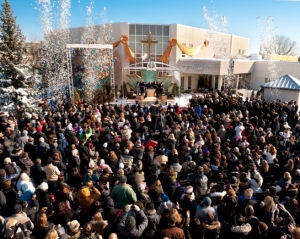 More than a thousand Scientologists and their guests from across Canada and the U.S. Great Lakes region gathered on February 9, 2013, to celebrate the opening of the new Church of Scientology of Cambridge, Ontario. Joining Church officials for the dedication ceremony were national and provincial dignitaries.


 Scientology Myths Forum


